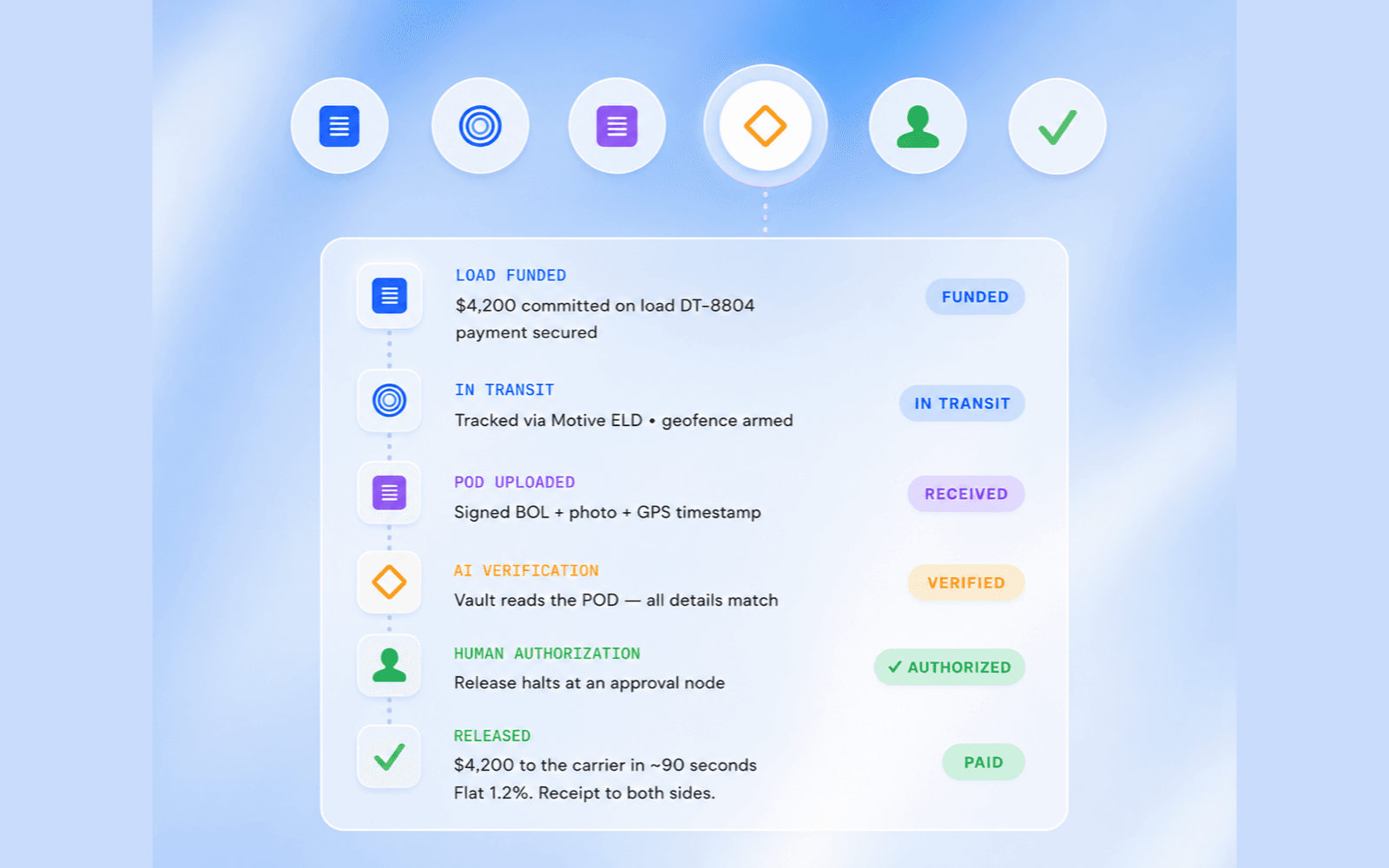

Yes, an AI voice agent can answer inbound carrier calls, verify the carrier and the load, and book when the rate sits inside the broker's rules. A person still approves every exception, including a rate outside budget and any compliance flag.
Freight is a phone business. Carriers call about loads at all hours, and an unanswered call is often a load that moves with someone else. After-hours and weekend calls are the ones most likely to wait for a dispatcher. The job of the agent is to pick up, do the routine checks, and leave judgment with the desk.
Why do inbound carrier calls get missed?
They get missed because inbound volume does not follow office hours, and because a dispatcher can only take one conversation at a time. While that person is checking a rate, confirming a carrier, or writing up a load, the next call waits.
The missed work is not only the call itself. It is the follow-up that never starts: the trust check, the rate comparison, the booking, and the note in the TMS. A later callback often reaches a carrier who has already moved the load. This is a capacity problem, not a motivation problem. Most inbound calls follow a repeatable script: who is calling, which load, which rate, does this carrier clear the checks, and can this be booked under the desk's rules. That script is a candidate for an agent. The exceptions are not.
What can an AI voice agent do on a carrier call?
A well-scoped agent can complete the routine part of the call, then stop when the rules say it must. In practice, that looks like this:
Answer the inbound call on a number the brokerage has provisioned, including nights and weekends.
Confirm who is calling and match the carrier against the records the desk already uses.
Confirm the load under discussion, against the load board or TMS.
Check the offered rate against the budget for that lane.
Book the load only when the carrier is clear and the rate sits inside the agreed range.
If anything sits outside the rules, hand the call or the file to a dispatcher with the context already written up: the carrier, the load, the rate, the budget, and the flag.
The agent should be able to talk naturally enough that the carrier can complete a routine booking without waiting for a callback. It should not bluff when it does not know, and it should not finish a booking that the desk would have refused. The same pattern can sit beside the rest of a freight operation. Document extraction can pull rate confirmations and bills of lading into the TMS. The voice agent is the most visible piece because it is the one talking to the carrier. It is not the whole system.
We built this pattern into the Dollar Traq AI operating system: an inbound voice agent, trust checks, document extraction, and approval gates, sitting on top of the broker's existing TMS. The public case study is the source for the platform details. The worked example in this post stays unnamed, because that client's result figures are not confirmed for use here.
Is it safe to let an AI agent negotiate rates?
It is safe when the agent negotiates inside a budget the desk has set, and when anything outside that budget goes to a person. It is not safe when the agent can close a rate the brokerage would not have accepted, or when a compliance flag can be ignored to get the booking done.
Safety, in this setting, is a design choice:
The budget and the rules live in the system, not in a prompt someone might forget to update.
The agent can move within the range. It cannot invent a new range.
A carrier with a trust, insurance, or authority flag is an exception, even if the rate looks good.
Every automated booking is recorded, including what the carrier said, what the agent offered, and which rule allowed the close.
A dispatcher can review, approve, or reject exceptions with the full context already attached.
Human approval is required at every important step. Booking inside the published rules can complete automatically, because the desk has already approved those rules. Booking outside the rules, paying a carrier, or overriding a flag must wait for a person. That gate should be part of the process, not a policy on a slide.
If a vendor cannot show you the budget, the flag handling, and the hand-off, the agent is not ready for live carrier traffic.
What must stay with a dispatcher?
Every exception. Every relationship call. Every decision that involves money outside the agreed range. Every case where the carrier, the load, or the paperwork does not match.
Dispatchers are not removed from the phones. They are removed from the routine queue so they can spend time where judgment matters. A regular shipper with a problem, a tight lane, a dispute, or a flagged carrier still needs a person. The agent should make that clear, either by transferring or by writing up the file and holding the action until a person decides.
The hand-off has to be good, or the whole design fails. "Please call this carrier back" is not a hand-off. The dispatcher needs the transcript or a clear summary, the checks already run, and the recommended next step. That is the same standard we use elsewhere in operations: the machine assembles the context, and the person says yes or no.
How should a brokerage roll this out?
Build it in phases, and make each phase live and useful before starting the next one.
Answering. The agent picks up, identifies the caller and the load, and captures a complete message if it cannot go further. Missed calls fall first. This phase already helps after hours.
Verification. The agent checks the carrier and the rate against the desk's records and budgets, then writes up the result for a dispatcher.
Booking inside the rules. Only after the first two phases are reliable should the agent be allowed to complete a booking, and only inside the agreed range, with a clean audit trail.
Exception handling. Refine the hand-off so dispatchers trust the write-up and can approve or reject quickly.
Do not start with a fully open negotiation on live loads, and do not connect booking to payment in the first phase. Keep the agent's authority narrow, then widen it when the desk has seen how it behaves. This work belongs with the wider freight and logistics process. If the load board, the TMS, and the trust checks are disconnected, the first map should include those systems.
What does an AI voice agent typically cost?
An AI voice agent starts from $5,000. Discovery starts from $750 and is credited to the build if you go ahead. Related work on the same operation may use the other starting-from floors on the pricing page: document and data extraction from $4,000, back office automation from $3,000, a custom operations platform from $12,000, and an operations retainer from $500 a month. Telephony and model usage are billed at cost.
These are floors, not quotes. A single inbound number with a narrow script is a different build from an agent that books, writes back to a TMS, and hands off exceptions. The right way to price it is to map the call types, the rules, and the systems, then agree a fixed scope.
Frequently asked questions
Can AI answer inbound carrier calls after hours? Yes. An AI voice agent can pick up nights and weekends, confirm the carrier and the load, and either complete a booking inside the desk's rules or write up the exception for a dispatcher. After-hours cover is often the first useful phase.
Can the agent book a load without a person on the line? It can complete a booking when the carrier is clear and the rate sits inside a budget the desk has already set. If the rate, the carrier, or the paperwork sits outside those rules, a person has to approve the next step before the load is booked.
Is it safe to let an AI voice agent negotiate rates with carriers? It is safe when negotiation is limited to the agreed range, flags cannot be skipped, and every booking is recorded. It is not safe when the agent can close outside the budget or override a compliance check. Ask to see the rules, the hand-off, and the audit trail before going live.
Does this replace dispatchers? No. It takes routine inbound calls off the queue so dispatchers can handle exceptions, relationships, and decisions that involve money outside the agreed range. The desk stays in control of every important action.
Will this work with our current TMS? It should sit on top of the TMS and the records you already use, rather than asking the desk to retype the call into a new system. If those connections are missing, they belong in the first phase of the map. See how this sits in our freight and logistics work.
How do we start? Book a call. We will listen to how inbound calls work today, mark which call types are ready for an agent, and mark which ones must stay with a dispatcher.
If inbound carrier calls are waiting on a person, especially after hours, book a call. We will map the script, the rules, and the hand-off, then quote a fixed first phase.