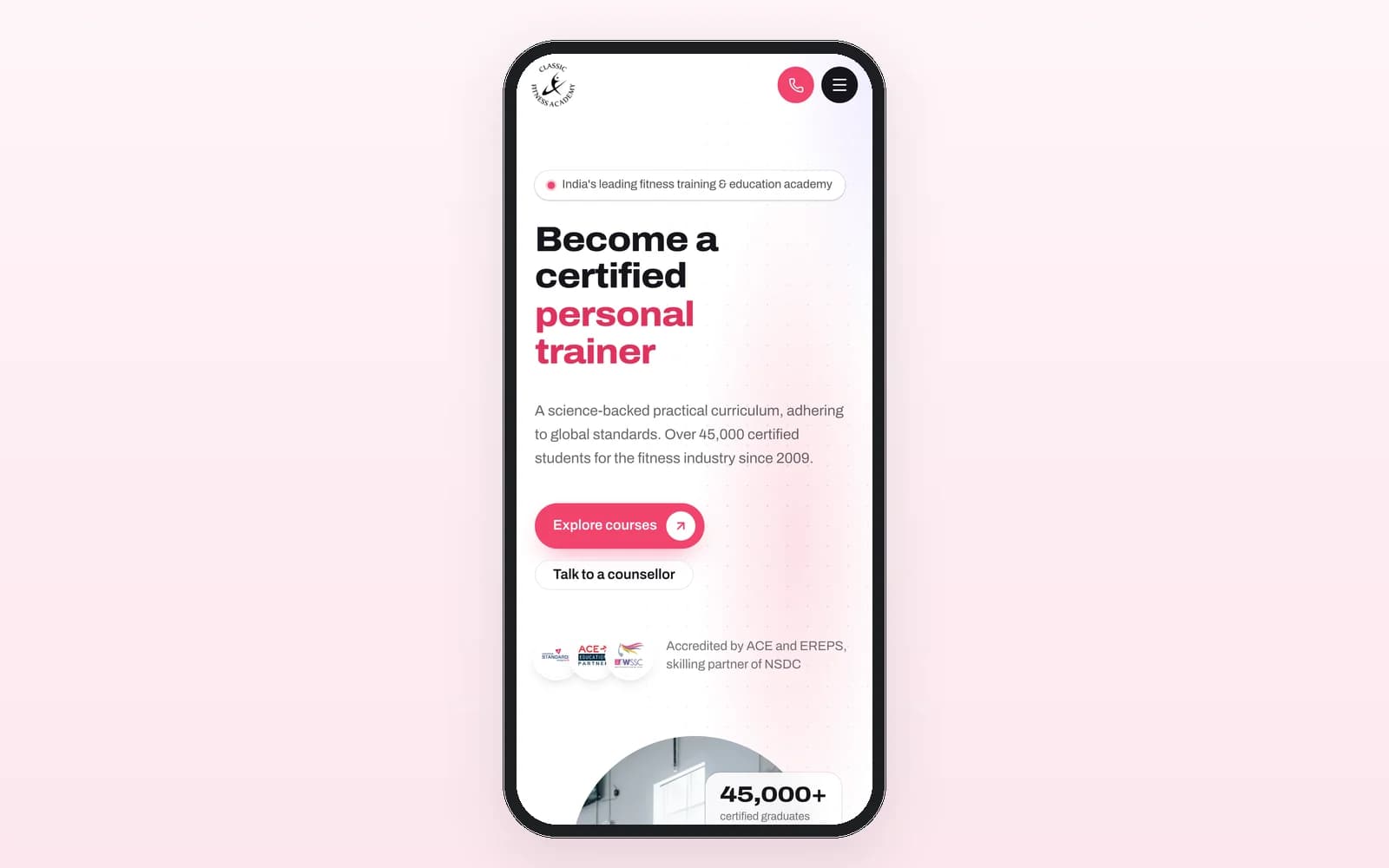

Short answer: Replacing LeadSquared with a custom CRM is worth it when per seat pricing taxes every hire and your sales process no longer fits the tool's assumptions. Both were true for Classic Fitness Academy, a Shark Tank India featured academy, which now runs over 130,000 leads on a CRM we built around its sales floor. If only one of those is true, extending your current CRM is often the better call.
LeadSquared is a capable product. So are HubSpot, Zoho and Salesforce. This is not a post about bad software. It is about the point where a rented tool stops fitting the business that rents it, and how to tell whether you have reached it.
When does a custom CRM beat a subscription CRM?
Two signals matter more than any feature list.
The bill grows faster than the value. Per user pricing makes a CRM more expensive with every hire. For a sales floor that is growing, that is a tax on growth. We wrote about this pattern in Why your CRM bill grows every time you hire.
The workflow no longer fits. When counselors or reps keep side spreadsheets, copy data between tools, or skip steps because the CRM's flow does not match how they actually work leads, you are paying for software and still doing the work by hand.
When both signals are present, a custom build usually wins. When only the cost signal is present, negotiate or trim seats. When only the workflow signal is present, try configuration and integrations first.
What problems pushed Classic Fitness Academy off LeadSquared?
CFA runs a network of direct and franchise centers. As the team and lead volume grew, four problems compounded:
Per user pricing made the CRM more expensive with every hire.
The off the shelf workflow could not match how CFA's counselors actually worked leads, which forced workarounds.
Management had no granular view of daily sales activity per person: calls made, follow ups done, leads moved.
Each center operated in its own silo, with no single source of truth across the network.
Notice that only the first one is about price. The other three are about control.
What we actually built
We built a custom web CRM from the ground up and connected it to every system that feeds the sales floor:
A lead pipeline shaped around CFA's own sales process, with full status history on every lead from first inquiry to enrollment.
Telephony integration, so inbound calls, a major share of all leads, land in the CRM automatically with call records attached.
WhatsApp templates, SMS and email reminders wired into daily follow up tasks.
Per counselor performance tracking: leads handled, calls made, and revenue against collections, visible to management in real time.
Collections with installment tracking, so fee follow ups stopped living in spreadsheets.
One central dashboard across every center, direct and franchise, replacing per branch silos.
The platform now manages over 130,000 leads, more than 275,000 call and follow up tasks, 8,000+ enrolled students and 7,700+ certificates. A steady 800+ leads a month flow through it.
The results on the case study page: significant recurring cost savings, because the CRM's cost does not climb with every new user; around 50 percent faster lead handling, with calls, messages and tasks in one screen instead of four tools; and management moving from monthly gut checks to daily, per person visibility.
What is the biggest mistake teams make when they leave a subscription CRM?
Our opinion: rebuilding the old tool feature by feature.
The point of going custom is to stop working around someone else's assumptions. If your spec is a copy of LeadSquared's menu, you will pay to build a worse LeadSquared. Start instead from the three or four moments that decide revenue on your floor, such as first response, the follow up that actually converts, and collections, and design those screens first.
The second mistake is forgetting the data. Years of lead history are an asset. Plan the migration as carefully as the build. When CFA later moved its whole ecosystem to a modern stack, every lead, task, student and certificate came across with its history. That story is in the platform migration case study.
What should a custom CRM connect to on day one?
Whatever already generates or touches a lead. For CFA that meant:
the phone system, because calls are a major lead source
messaging and email, because follow ups happen there
collections, because enrollment is not finished until the fee is
the website, student app and exam platform, which now share the CRM's data layer
A CRM that does not see calls and payments is a contact list with a dashboard.
Is a custom CRM harder to maintain than a subscription?
It is different, not automatically harder. You trade a vendor's roadmap for your own. That only works if the system is built on a stack your team or partner can keep extending, with clean data underneath. CFA's CRM has been in daily use since 2019 and was rebuilt on Next.js, Express and PostgreSQL in 2026, so it can be extended for the next six years instead of patched.
What does it cost?
A CRM shaped around your operation is a custom operations platform, which starts from $12,000. If the immediate pain is slow first response, a lead response and qualification build starts from $2,500. Discovery is $750, credited to the build. See pricing and our custom CRM and ERP development service.
Read the full Classic Fitness Academy CRM case study, or book a call and we will tell you honestly whether to build or stay.
Frequently asked questions
When is a custom CRM better than LeadSquared? When per seat pricing starts taxing growth and your sales process no longer fits the tool's assumptions. If only one of those is true, extending your current CRM is often cheaper.
Can a custom CRM capture calls automatically? Yes. CFA's CRM captures inbound calls through a telephony integration, so call leads land in the pipeline with call records attached.
How much activity can a custom CRM handle? CFA's platform manages over 130,000 leads and more than 275,000 call and follow up tasks, with 800+ new leads a month.
Will we lose our lead history if we switch? You should not. Plan the migration as part of the build, with counted reports and checks before cutover. CFA's later migration brought every lead and task across with its history.
How much does a custom CRM cost? A custom operations platform starts from $12,000, after a $750 paid discovery that is credited to the build.