
Yes, it is safe to let an AI voice agent negotiate rates with carriers when the agent can move only inside a budget the desk has set, and when anything outside that budget goes to a person. It is not safe when the agent can close a rate the brokerage would not have accepted, or skip a compliance flag to get the booking done.
Safety in this setting is a design choice, not a personality trait of the model. The questions to ask are simple: where do the rules live, what happens on a flag, how does a person take over, and can you replay the call later. This post is the buying test. For the working sequence of a live inbound call, see How AI Can Answer Inbound Carrier Calls.
What does "negotiate inside the rules" actually mean?
It means the desk sets the range first, and the agent works inside that range. The budget for a lane, or for a load, lives in the system. The agent can offer, counter, and close when the carrier's number sits inside that range and the carrier clears the checks. It cannot invent a new range, and it cannot treat a near miss as a yes.
The rules have to live in the system, not only in a prompt that someone might forget to update. A prompt is easy to change and hard to audit. A budget field, a hard stop, and a recorded outcome are harder to bypass, and easier to explain later to a shipper, a partner, or an auditor.
Negotiation is not the same as booking at any price. If the carrier comes in above the cap, the right behavior is to hold the line, explain the limit if the script allows it, and hand the call or the file to a dispatcher. Closing "just this once" is how a safe agent becomes an expensive one.
The same standard applies to the rest of the call, not only the number. A carrier who does not clear the trust, insurance, or authority checks is an exception, even if the rate looks good. A cheap flagged carrier is not a win.
What has to happen when a rate or a carrier sits outside the rules?
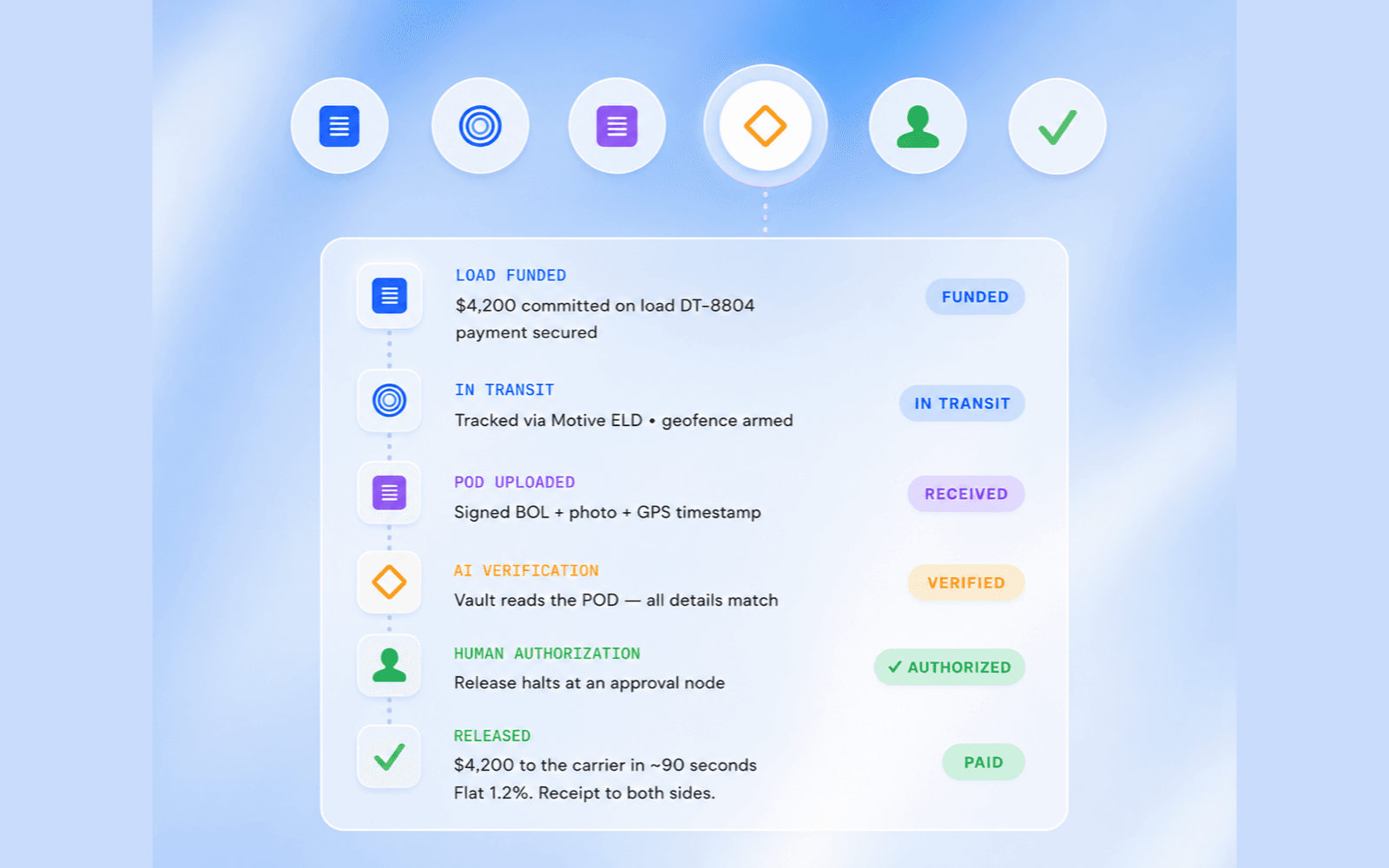
The agent must stop, write up the context, and wait for a person. The write-up should include the carrier, the load, the offered rate, the budget, the flag if there is one, and a recommended next step. "Please call this carrier back" is not a hand-off.
A dispatcher can then approve, reject, or take over the conversation. Relationship calls, tight lanes, regular shippers with a problem, and any decision that involves money outside the agreed range stay with that person. The agent clears the routine queue so the desk has time for those cases.
The gate has to be part of the process. If a supervisor can switch off approvals to "just get the loads booked," the design is not safe. Human approval is required at every important step: an out-of-range rate, a compliance flag, and any payment that follows the load.
This is also why after-hours cover can be useful without being reckless. The agent can answer at night, complete bookings that sit inside the rules, and leave a clean file for the morning when they do not. The desk is still in control of the exceptions. It is just not required to pick up every routine call at 11pm.
What should you see in the audit trail?
You should be able to replay what happened. That means a record of what the carrier said, what the agent offered, which rule allowed or blocked the close, and who approved any exception. If a booking cannot be explained the next day, the agent is not ready for live traffic.
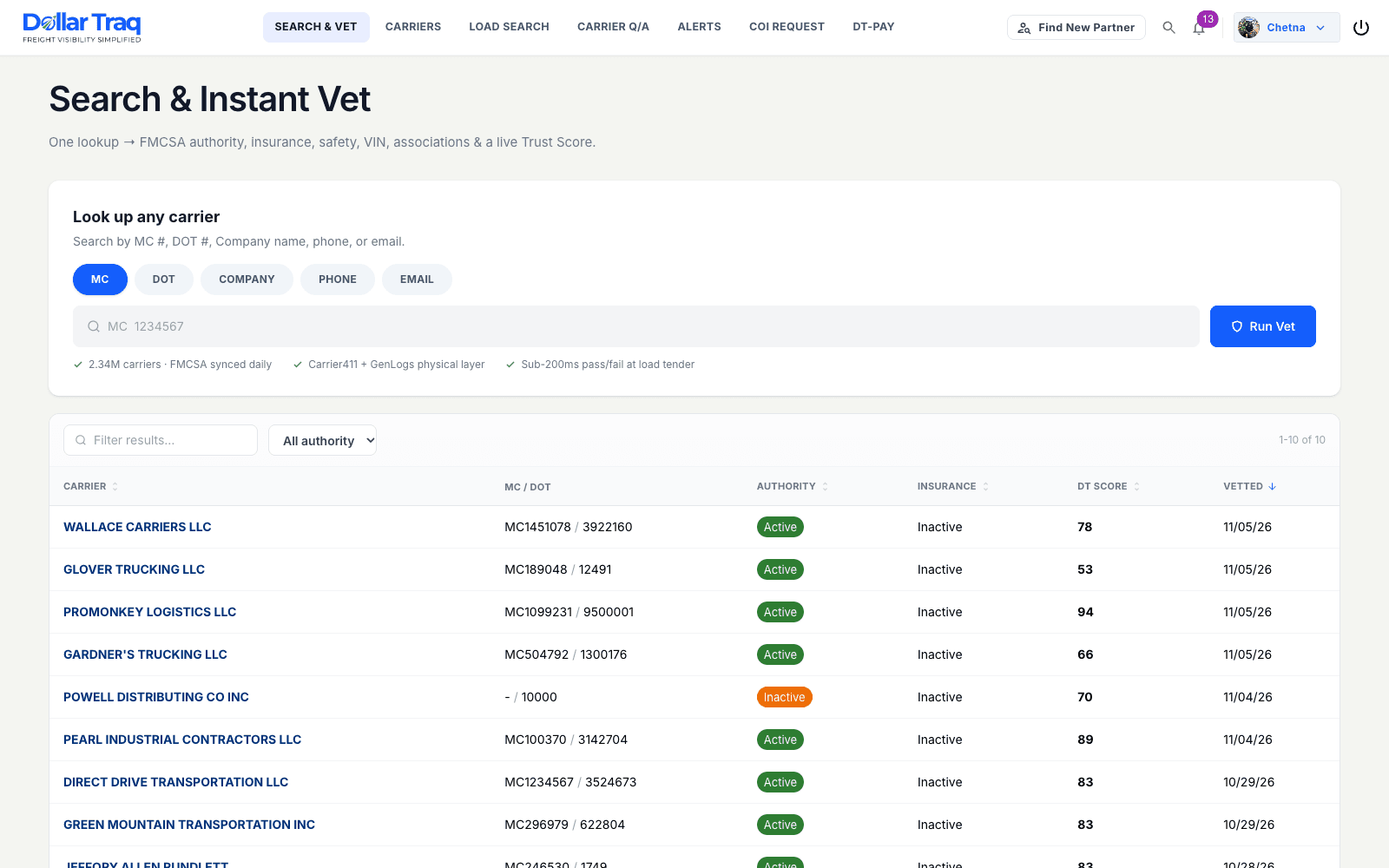
A useful audit trail also shows the checks that ran during the call: the carrier match, the trust or insurance result, and the budget that was applied. The desk should not have to reconstruct this from memory or from a separate spreadsheet.
Ask for a sample recording or transcript, a sample exception file, and a sample booking that stayed inside the rules. Then ask what happens if the TMS, the load board, or the trust data is missing mid-call. An honest answer is that the agent should stop or hand off, not guess.
If a vendor cannot show you those artefacts, or answers only with a demo of a smooth happy-path call, treat that as a gap. A buying decision should be based on the exception path, not only on the path that works.
How do you tell a safe build from a risky one?
Use a short test when you evaluate a tool or a custom build:
The budget and the rules are stored as system values, not only as wording in a prompt.
The agent can move within the range and cannot close outside it.
A trust, insurance, or authority flag blocks an automatic booking, even when the rate is attractive.
Every automated booking is recorded, including offers, counters, and the rule that allowed the close.
A person can take over, approve, or reject, with the context already attached.
Payment, if it is in scope at all, waits for a person. It is not bundled into the first phase.
If several of those points are missing, the agent is a risky fit, even if it sounds natural on the phone. Natural speech is not the same as a controlled negotiation.
Off-the-shelf voice products can be enough when the script is simple and the desk is ready to live inside that product's rules. A custom build is the better path when your budgets, flags, and TMS connections are specific, or when you need the approval gate engineered into the process. That is the pattern in our freight and logistics work, and in the Dollar Traq AI operating system case study, where approval gates are part of the system rather than a policy on a slide. This post does not repeat the case-study figures.
For a wider map of what else can be automated around the call, see What Parts of a Freight Brokerage Can AI Automate?.
What does a safe first phase typically cost?
An AI voice agent starts from $5,000. Discovery starts from $750 and is credited to the build if you go ahead. If the same operation needs document filing or a wider operations layer, the other starting-from floors on the pricing page apply: document and data extraction from $4,000, back office automation from $3,000, a custom operations platform from $12,000, and an operations retainer from $500 a month. Telephony and model usage are billed at cost.
These are floors, not quotes. A narrow after-hours answering phase, with write-ups and no booking, is a different scope from an agent that negotiates inside a budget, writes back to a TMS, and hands off exceptions with a full audit trail. The way to price it is to map the call types, the rules, and the gates, then agree a fixed first phase.
Frequently asked questions
Is it safe to let an AI voice agent negotiate rates with carriers? It is safe when negotiation is limited to a budget the desk has set, flags cannot be skipped, and a person approves every exception. It is not safe when the agent can close outside the budget or override a compliance check.
Can the agent book a load without a dispatcher on the line? Yes, when the carrier is clear and the rate sits inside the agreed range. If the rate, the carrier, or the paperwork sits outside those rules, a person has to approve the next step before the load is booked.
What should stay with a dispatcher? Every exception, every relationship call, and every decision that involves money outside the agreed range. The agent should hand over a complete file, not a request to "call them back."
What should we ask a vendor before going live? Ask where the budget lives, what happens on a flag, how a person takes over, and whether you can replay the call and the checks. Ask to see an exception path, not only a happy-path demo.
Will this work with our current TMS? It should sit on top of the TMS and the records you already use. If the agent cannot read the load or write the outcome back, that connection belongs in the first phase.
How do we start? Book a call. We will walk through your call types and rules, mark what is safe to automate, and mark what must stay with a dispatcher.
If you are considering an AI voice agent for carrier calls, book a call. We will help you test whether the rules, the hand-off, and the audit trail are strong enough to go live.