
Most of a freight brokerage can be automated where the work already follows a written rule: carrier checks, after-hours call handling, document filing, tracking updates, and routine payment steps. A person should still approve every exception, every booking outside the agreed rules, and every payment.
That is the useful map, not a claim that a brokerage can run with no desk. The repetitive work is large. The judgment is concentrated in a smaller set of moments, and those moments are where money, compliance, and relationships sit. This post is a process map of that split, written for operators who want to know what to automate first. For how an inbound voice agent works on a live call, see How AI Can Answer Inbound Carrier Calls.
Which brokerage tasks are already ready for AI?
A task is ready when the inputs are consistent, the rule can be written down, and a wrong output can be caught before it moves a load or releases money. In a typical brokerage, that set is wider than people expect.
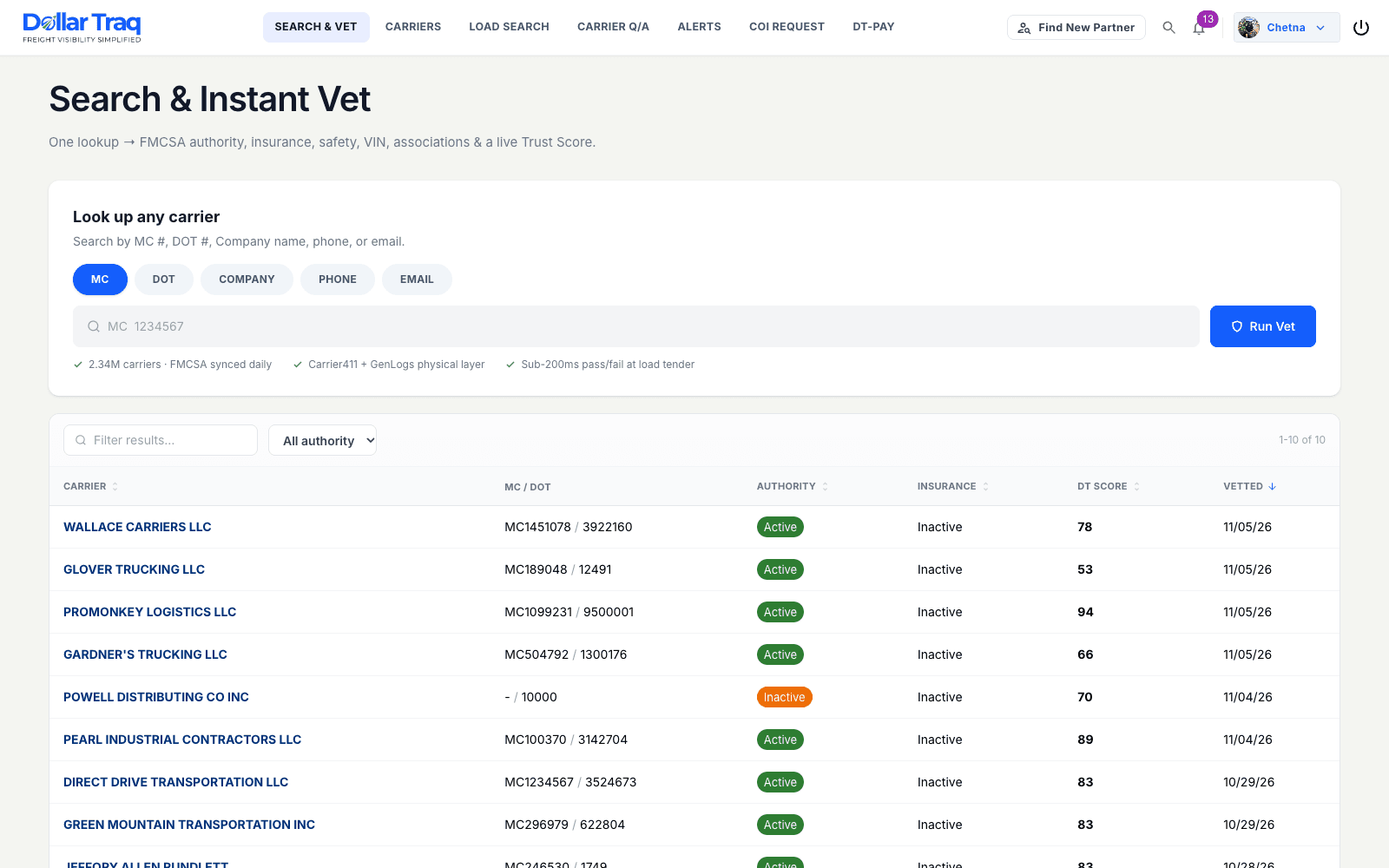
Carrier vetting is a clear starting point. Pulling authority, insurance, and safety records, comparing them with the desk's rules, and flagging a problem is repetitive work. The decision to use a flagged carrier, or to make an exception, is not. The system can assemble the file and apply the hard stops. A person should still see anything that does not clear.
Inbound carrier calls are ready when they follow a script: who is calling, which load, which rate, does this carrier clear the checks, and can this be booked under the desk's rules. An AI voice agent can answer, including after hours, and complete a booking only inside those rules. A rate outside budget, a compliance flag, or a relationship call goes to a dispatcher, with the context already written up.
Document work is ready in the same way. Rate confirmations, bills of lading, certificates of insurance, and proof of delivery arrive every day, usually in mixed formats. Extraction can classify the document, pull the fields, score confidence, and file the result against the load. A person should review a low-confidence read, or any mismatch with the load, before the file is treated as final.
Tracking and status updates are ready once the location or milestone is already known to a connected system. The machine can draft a check call, update a status, or flag a late risk. The exception, such as a service failure that will affect a shipper relationship, stays with a person.
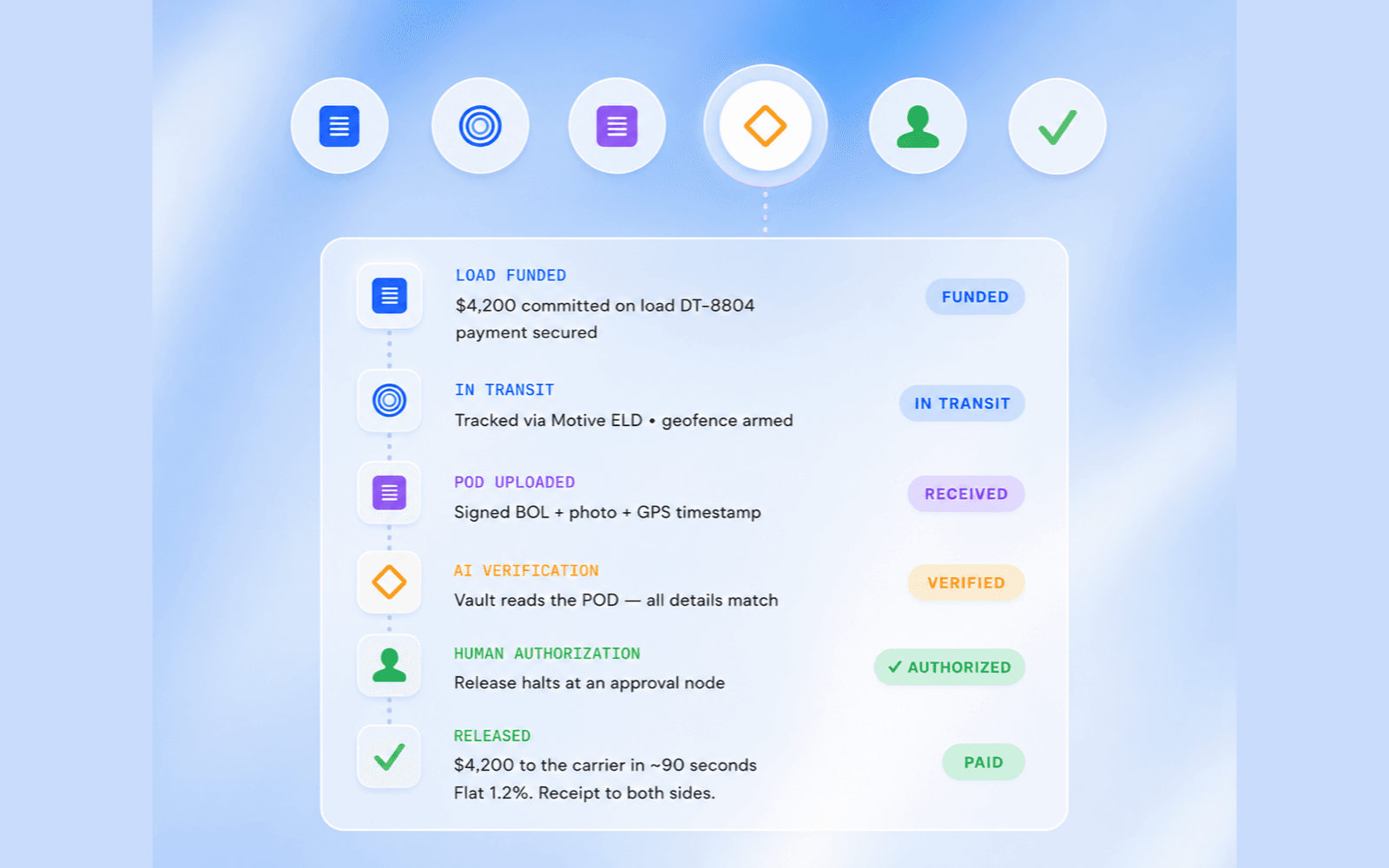
Routine payment steps can be prepared by the system: match the proof of delivery to the load, hold the file until the conditions are met, and present the release for approval. The release itself should wait for a person. Payment is money leaving the business. It is not a step to fully automate on day one.
What should a person still approve?
A person should approve any action that books a load outside the agreed rules, overrides a trust or insurance flag, changes a shipper relationship, or releases payment. Those gates should be part of the process, not a policy that someone can switch off.
The desk also keeps the work that is not a script. A regular shipper with a problem, a tight lane, a dispute, or a carrier who needs a conversation still needs a dispatcher. Automation should clear the routine queue so that time is available, not remove the people who use it.
A good hand-off is part of this design. "Please look at this" is not enough. The person should see the carrier, the load, the rate, the rule that was applied, the flag, and a recommended action, then say yes or no. The machine assembles the context. The person decides.
If a tool cannot show you where those gates live, or lets an agent complete a payment or an out-of-rule booking without a person, it is not a safe fit for a brokerage, no matter how smooth the demo looks.
In what order should a brokerage automate this work?
Automate in the order that removes waiting and retyping first, then add more ambitious agents on top of a process that already stands up. A practical sequence looks like this:
Map the desk. List the repeated tasks, mark the ones with written rules, and mark where work waits for a hand-off or an approval.
Clean the inputs enough for a rule to run. If insurance certificates, rate confirmations, or load statuses live in scattered inboxes, fix that first. Automation on missing data only produces confident mistakes.
Start with vetting and document filing. Both are written-down, high-volume, and easy to check before they affect a load.
Add after-hours call answering and write-ups, then booking inside the rules, once the trust checks and load data are reliable.
Add tracking updates and payment preparation last, with payment release staying behind a human gate.
This is the same 80/20 order we use more generally: written-down work first, then hand-offs, then one-click approvals. See Which Operations Work Should You Automate First?.
Do not start with a fully open voice agent on live loads if the TMS, the load board, and the trust checks are disconnected. The agent will read incomplete data aloud. The first map should include those systems.
Should this sit on top of the TMS you already use?
In most mid-size brokerages, yes. The TMS is often the system the desk already trusts for loads, customers, and accounting. The expensive work sits around it: vetting, documents, inbound calls, tracking chases, and payments. A custom layer can connect to that TMS, rather than asking every coordinator to live in yet another product.
A rip and replace is rarely the first move. If the TMS cannot receive the extracted fields or the booking outcome, that integration belongs in the first phase of the map. If a vendor asks you to abandon a working TMS in order to use their agent, treat that as a warning sign, not a requirement.
The same idea is in our freight and logistics work, and in the Dollar Traq AI operating system case study: an inbound voice agent, trust checks, document extraction, and approval gates, sitting on top of the broker's existing TMS. The case study is the source for the platform details. This post does not repeat those figures.
Off-the-shelf freight tools can be the right choice when the workflow is standard and the desk is happy with the defaults. A custom build is the better path when the rules, the approvals, or the TMS connections are specific to how you operate. That choice should be made in Discovery, not from a generic recommendation.
What does this typically cost?
Discovery starts from $750 and is credited to the build if you go ahead. Related starting-from floors on the pricing page are:
AI voice agent: $5,000
Document and data extraction: $4,000
Back office automation: $3,000
Custom operations platform: $12,000
Operations retainer: $500 a month
Usage, including telephony and model usage, billed at cost
These are floors, not quotes. A first phase that files documents or answers after-hours calls is a different scope from a platform that vets, books inside rules, tracks, and prepares payments. The way to price it is to map the process, then agree a fixed first phase.
Frequently asked questions
What parts of a freight brokerage can be automated with AI? The written-down parts: carrier vetting, after-hours and routine inbound calls, rate confirmation and bill of lading filing, tracking updates, and the preparation of payment files. A person should still approve exceptions, bookings outside the agreed rules, and every payment.
Can a small brokerage do this without hiring more back-office staff? Yes, that is often the point. The aim is to take repetitive work off the current desk so the same people can cover more volume and spend time on exceptions and shipper relationships. It is not a promise that no one will be needed at the desk.
Is it safe to let an agent book a load? It is safe when the agent can book only inside rules the desk has already set, and when anything outside those rules, including a flagged carrier, goes to a person with the context attached. See Is It Safe for AI to Negotiate Carrier Rates? for the buying test.
Will this work with our current TMS? It should sit on top of the TMS and the records you already use. If those connections are missing, they belong in the first phase. Replacing a working TMS is rarely the first step.
What should we automate first? Start with work that already has a written rule and can be checked before it moves a load or releases money. Vetting and document filing are the usual first set. After-hours call answering can follow once the underlying data is reliable.
How do we start? Book a call. We will map the desk, mark what is ready for a machine, mark what a person must still approve, and quote a fixed first phase.
If your desk is losing time to vetting, paperwork, or after-hours calls, book a call. We will show you what to automate first, and what should stay with a dispatcher.